Four things Republicans used to believe
Commentary: The party used to be conservative, but not extreme
By Rex Nutting
WASHINGTON (MarketWatch) — The Republican Party used to be a center-right party, conservative but mainstream. Now it's the home of extreme views.
Just how extreme have Republican leaders become? Here are four things mainstream Washington Republicans used to believe in, but no longer do.
Taxation: The Republican Party has long favored low tax rates as a way to encourage economic efficiency, but its leaders have always recognized that some taxation is necessary and good. Under the old Republican philosophy, the purpose of taxation is to raise the revenues needed by the government. They believed, in theory, that the government shouldn’t spend money it didn’t have, so sufficient revenues were needed.
Ronald Reagan cut taxes dramatically in his first year in office, but when the deficits rose, he smartly agreed to raise taxes 12 times, including a broad tax-reform bill that eliminated many loopholes and removed many provisions of the tax code that distorted economic incentives.
Today’s Republican Party has abandoned the principle that some taxation is necessary. The party has fully bought into the “starve-the-beast” rhetoric espoused by Grover Norquist and other anti-tax zealots. It has adopted a rigid libertarian philosophy that equates taxation to tyranny, which argues that the government has no right to your money. Taken to its logical conclusion, this would mean all taxes are immoral.
For today’s Republicans, the proper level of taxation is no longer a question of paying for needed services in the most efficient manner, but is strictly a moral and political matter. The proper level is zero, and only political obstacles stand in the way of achieving that goal.
The current Republican Party pretends to care about deficits, but it clearly doesn’t. It refuses to even consider raising taxes to reduce the deficit, even by closing inefficient loopholes that distort the economy. The Republican-controlled House passed the Ryan budget plan, which cuts taxes and spending by trillions of dollars but does almost nothing to reduce the deficit over the next 10 years
A strong presidency: Republicans have long favored a strong presidency, especially in foreign affairs. Under the administration of George W. Bush, high officials even promoted an extreme theory of a “unitary executive” that claimed that the president was largely above the law, and could do pretty much what he wanted, including ignoring national and international laws banning torture and unlawful imprisonment.
That’s a far cry from today, when Republicans in the House rushed to approve a resolution to condemn President Barack Obama’s involvement in Libya’s civil war, saying he didn’t consult with Congress enough. That was the same complaint some Republicans had about Democratic President Bill Clinton’s decision to fight in Kosovo.
The Libyan crisis put the Republicans in a terrible jam. Generally, they like a good fight, especially against a cartoonish bully like Moammar Gadhafi. When the rebellion first broke out, many Republicans demanded that the U.S. get involved in the civil war. But then Obama ordered a no-fly zone over Libya, just as Republicans had demanded. Nothing infuriates Republicans more than when Obama agrees with them.
It seems as if the Republicans do have a consistent principle when it comes to the president’s war-making powers: Republican presidents are the unquestioned commander-in-chief of the armed services and may start wars wherever they please, but Democratic presidents aren’t even qualified to order lunch, much less boss the troops around.
Protecting our planet: Republicans used to be conservatives in the truest sense of the word. They favored sensible laws to conserve the water, air and land. The Environmental Protection Agency was created by Republican President Richard Nixon.
For years, Republicans favored market-based solutions to environmental problems, rather than relying on government regulations and bureaucrats. For instance, many Republicans, including John McCain, Lindsey Graham, Mark Kirk, Tim Pawlenty and Mitt Romney, favored a plan to give businesses an incentive to reduce greenhouse gases by giving them the right to sell their rights to emit carbon dioxide — what’s known as the cap-and-trade plan to combat climate change.
Cap and trade is a Republican idea through and through; it was modeled on the successful cap-and-trade acid-rain program initiated by the White House under Republican President George H.W. Bush in 1990. Read the Political History of Cap and Trade.
Today’s Republicans reject almost all government actions to protect the environment, saying they kill jobs. They want to drill for oil and gas everywhere, they want the EPA to stop regulating pollution, and they categorically reject all scientific evidence for climate change. They are so dead-set against conservation that they voted to kill a regulation (approved under Republican President George W. Bush) requiring that Americans use light bulbs that actually emit more light than heat.
Universal health coverage: It’s no secret that today’s Republican Party loathes the idea of universal health-care coverage. It believes requiring Americans to buy coverage is unconstitutional and immoral. One of its most cherished goals is to repeal the Affordable Care Act.
But did you know that the Affordable Care Act — derisively known as ObamaCare — is essentially a Republican plan, modeled after a 1993 Republican health-care bill and the Massachusetts state law signed by Mitt Romney?
The ambition of the 1993 bill introduced by Rhode Island Republican John Chafee was to provide universal coverage, with all Americans required to buy insurance. The bill would have subsidized coverage for those with low incomes. It would have prohibited denial of coverage based on pre-existing conditions. And it would have fined employers who did not offer a qualified health-care plan. Sound familiar?
It was sponsored by 19 Republican senators, including Bob Dole, Pete Domenici, Chuck Grassley, Orrin Hatch, Bob Bennett, Dick Lugar, Alan Simpson and Ted Stephens.
You may not recognize all those names, but you should know this group was the Republican establishment in 1993. And that Republican establishment was far to the left of today’s Republican Party.
[READ THE ORIGINAL ARTICLE HERE]
Wednesday, July 20, 2011


Wednesday, July 13, 2011
Economists find flaws in federal estimate of climate damage
Economists find flaws in federal estimate of climate damage
July 13, 2011
A new report concludes that each ton of carbon dioxide emitted in the atmosphere inflicts as much as $900 in environmental harm - almost 45 times the amount the federal government uses when setting regulations. The gap, advocates say, disguises the true value of emissions reductions.
By Douglas Fischer
Uncle Sam's estimate of the damage caused by each ton of carbon dioxide is fundamentally flawed and "grossly understates" the potential impacts of climate change, according to an analysis released Tuesday by a group of economists.
The study found the true cost of those emissions to be far beyond the $21 per ton derived by the federal government.
The figure, commonly known as the "social cost of carbon," is used by federal agencies when weighing the costs and benefits of emissions-cutting regulations, such as air conditioner efficiency standards and greenhouse gas emissions limits for light trucks.
A truer value, according to the Economics for Equity and the Environment Network, an organization of economists who advocate for environmental protection, could be as high as $900 per ton - equivalent to adding $9 to each gallon of gas. Viewed another way, with the United States emitting the equivalent of close to 6 million tons of carbon dioxide annually, the higher figure suggests that avoiding those emissions could save the nation $5.3 trillion annually, one-third of the nation's economic output.
'Dramatic simplifications'
A second, separate report released Tuesday buttressed the argument, finding that the government routinely underestimates the benefits of avoiding climate change when conducting cost-benefit analysis on regulations aimed at reducing greenhouse gas emissions.
This second report, published jointly by the World Resources Institute, an environmental think tank, and the Environmental Law Institute, found that government models on climate impacts often contain "dramatic simplifications and assumptions" - such as when calculating the social cost of carbon - that underplay the benefits society gains by curbing emissions.
Together, the two reports suggest policy makers are looking at a distorted picture as they assess the economic impacts of climate regulations.
The issue has gained urgency as efforts to create a cap-and-trade system or impose a carbon tax have stalled in Congress and federal rules - via the U.S. Environmental Protection Agency - become the primary vehicle for reducing emissions.
"Based on what we know today, the government's current range of social costs is very likely a serious underestimation of what we think those costs will be," said Kristen Sheeran, executive director of the E3 Network.
"It does not reflect the urgency of the climate crisis," she added. "It could lead to a degree of inaction on climate change that frankly is not supported by either the economics or the science at this point."
Costly impacts missed
A lower social cost of carbon - particularly when combined with an underestimate of the benefits of reducing emissions - makes justifying expensive emissions-cutting regulations much harder, advocates say.
But how to value the cost of climate change has proven to be a contentious issue.
Computer models attempting to assess the economic impacts of climate change are, in many cases, streamlined affairs that can only look at impacts broadly - at a scale of hundreds of miles, instead of, say, at a particular watershed, township, or even state.
Economists at the E3 Network, an umbrella group of about 200 economists, contend many potentially costly impacts are missed: Sweltering inland temperatures are averaged with cooler coastal weather. Or an intense, deadly rainstorm never shows up in a monthly average rainfall tally.
That leads to considerable uncertainty about the severity of the damages. For example, a global model used in part by the federal government to derive the $21-per-ton price finds that a 4.5ºF (2.5ºC) temperature rise will cost 1.8 percent of the world GDP. But University of California, Berkeley, economist Michael Hanemann, conducting a detailed review of that estimate as it applies just to the United States, found it should be four times as large.
Inflated assumptions
The point, say E3 economists, is that when the latest science on cost of climate extremes, the pace of global change, and how to account for those damages in the future are incorporated into the federal government's mathematics, the picture changes dramatically.
"Now that we know how much we could end up paying to endure the impacts of climate change, investing in reducing our emissions is clearly the prudent option," Frank Ackerman, an economist with the Stockholm Environment Institute and one of the report's two authors, said in a statement. "It's the difference between servicing your car, or waiting for it to break down on the highway."
Officials at the EPA were unavailable for comment Tuesday evening. Michael Greenstone, the Massachusetts Institute of Technology Professor who led the federal effort to price the cost of climate impacts (pdf), was similarly unavailable.
In an interview earlier this year, however, Greenstone said the federal panel charged with pricing impacts did consider several studies that pegged the social cost of carbon closer to $3,000 per ton of carbon dioxide. But those higher values were based on unlikely assumptions, Greenstone said. When the panel held those assumptions and variables constant, the picture changed dramatically, and the federal estimate fell within the mid-range of the published literature, he said.
The federal panel published its $21-per-ton figure in February 2010 with a promise to reassess its work within two years. Sheeran noted 18 months have passed, with no evidence the estimate is being revised.
"It does not appear to be a priority within the administration," she said.
[READ THE ORIGINAL ARTICLE HERE]
July 13, 2011
A new report concludes that each ton of carbon dioxide emitted in the atmosphere inflicts as much as $900 in environmental harm - almost 45 times the amount the federal government uses when setting regulations. The gap, advocates say, disguises the true value of emissions reductions.
By Douglas Fischer
Uncle Sam's estimate of the damage caused by each ton of carbon dioxide is fundamentally flawed and "grossly understates" the potential impacts of climate change, according to an analysis released Tuesday by a group of economists.
The study found the true cost of those emissions to be far beyond the $21 per ton derived by the federal government.
The figure, commonly known as the "social cost of carbon," is used by federal agencies when weighing the costs and benefits of emissions-cutting regulations, such as air conditioner efficiency standards and greenhouse gas emissions limits for light trucks.
A truer value, according to the Economics for Equity and the Environment Network, an organization of economists who advocate for environmental protection, could be as high as $900 per ton - equivalent to adding $9 to each gallon of gas. Viewed another way, with the United States emitting the equivalent of close to 6 million tons of carbon dioxide annually, the higher figure suggests that avoiding those emissions could save the nation $5.3 trillion annually, one-third of the nation's economic output.
'Dramatic simplifications'
A second, separate report released Tuesday buttressed the argument, finding that the government routinely underestimates the benefits of avoiding climate change when conducting cost-benefit analysis on regulations aimed at reducing greenhouse gas emissions.
This second report, published jointly by the World Resources Institute, an environmental think tank, and the Environmental Law Institute, found that government models on climate impacts often contain "dramatic simplifications and assumptions" - such as when calculating the social cost of carbon - that underplay the benefits society gains by curbing emissions.
Together, the two reports suggest policy makers are looking at a distorted picture as they assess the economic impacts of climate regulations.
The issue has gained urgency as efforts to create a cap-and-trade system or impose a carbon tax have stalled in Congress and federal rules - via the U.S. Environmental Protection Agency - become the primary vehicle for reducing emissions.
"Based on what we know today, the government's current range of social costs is very likely a serious underestimation of what we think those costs will be," said Kristen Sheeran, executive director of the E3 Network.
"It does not reflect the urgency of the climate crisis," she added. "It could lead to a degree of inaction on climate change that frankly is not supported by either the economics or the science at this point."
Costly impacts missed
A lower social cost of carbon - particularly when combined with an underestimate of the benefits of reducing emissions - makes justifying expensive emissions-cutting regulations much harder, advocates say.
But how to value the cost of climate change has proven to be a contentious issue.
Computer models attempting to assess the economic impacts of climate change are, in many cases, streamlined affairs that can only look at impacts broadly - at a scale of hundreds of miles, instead of, say, at a particular watershed, township, or even state.
Economists at the E3 Network, an umbrella group of about 200 economists, contend many potentially costly impacts are missed: Sweltering inland temperatures are averaged with cooler coastal weather. Or an intense, deadly rainstorm never shows up in a monthly average rainfall tally.
That leads to considerable uncertainty about the severity of the damages. For example, a global model used in part by the federal government to derive the $21-per-ton price finds that a 4.5ºF (2.5ºC) temperature rise will cost 1.8 percent of the world GDP. But University of California, Berkeley, economist Michael Hanemann, conducting a detailed review of that estimate as it applies just to the United States, found it should be four times as large.
Inflated assumptions
The point, say E3 economists, is that when the latest science on cost of climate extremes, the pace of global change, and how to account for those damages in the future are incorporated into the federal government's mathematics, the picture changes dramatically.
"Now that we know how much we could end up paying to endure the impacts of climate change, investing in reducing our emissions is clearly the prudent option," Frank Ackerman, an economist with the Stockholm Environment Institute and one of the report's two authors, said in a statement. "It's the difference between servicing your car, or waiting for it to break down on the highway."
Officials at the EPA were unavailable for comment Tuesday evening. Michael Greenstone, the Massachusetts Institute of Technology Professor who led the federal effort to price the cost of climate impacts (pdf), was similarly unavailable.
In an interview earlier this year, however, Greenstone said the federal panel charged with pricing impacts did consider several studies that pegged the social cost of carbon closer to $3,000 per ton of carbon dioxide. But those higher values were based on unlikely assumptions, Greenstone said. When the panel held those assumptions and variables constant, the picture changed dramatically, and the federal estimate fell within the mid-range of the published literature, he said.
The federal panel published its $21-per-ton figure in February 2010 with a promise to reassess its work within two years. Sheeran noted 18 months have passed, with no evidence the estimate is being revised.
"It does not appear to be a priority within the administration," she said.
[READ THE ORIGINAL ARTICLE HERE]
Tuesday, July 12, 2011
Monday, July 11, 2011
FDA Approves Genetically Modified Grass
FDA Approves Genetically Modified Grass: A Blow to the Organic Movement
Esther Farin, July 10, 2011
Just as sneakily as it approved genetically modified corn, soy, and various other plants, the FDA cleared the way for genetically modified Kentucky bluegrass made by Scotts Miracle-Gro on Friday, July 1st. Like other genetically modified plants, genes of foreign materials (in this case corn, rice, and other plants) were inserted into the seeds to create Kentucky bluegrass. The intent of this lab-created grass is to withstand copious amounts of Round-Up weedkiller, brought to us by Monsanto, that this nation's soil could stand to do without. This modified grass would be used and sold as lawn grass.
GM Kentucky bluegrass could have a devastating impact to the organic movement if it grows wild, because it will contaminate fields. And because genetically modified seeds are patented for growing, organic farmers may also face unwarranted lawsuits as a result. Coupled with the fact that this grass is actually considered a "noxious weed" due to its glysophate resistance, its approval should leave most scratching their heads.
Although genetically modified crops have been used as food for well over a decade, sold in fast food, frozen meals, and processed foods to hundreds of millions of unknowing Americans, it is only within the past few years that their controversy has come to light. People are concerned both with the health implications of genetically modified plants as well as their impact on the environment, That a lawn grass can withstand unlimited amounts of pesticide does not necessarily translate for healthy living and the impact of usage of this grass in people's homes could lead to damage to the soil that will leave them unable to plant much else.
Approval of GM Kentucky bluegrass also paves the way for other plants to pass through the FDA's approval system without any scientific testing, further disrupting the U.S.'s damaged environment and food supply while going unregulated.
[READ THE ORIGINAL ARTICLE HERE]
Esther Farin, July 10, 2011
Just as sneakily as it approved genetically modified corn, soy, and various other plants, the FDA cleared the way for genetically modified Kentucky bluegrass made by Scotts Miracle-Gro on Friday, July 1st. Like other genetically modified plants, genes of foreign materials (in this case corn, rice, and other plants) were inserted into the seeds to create Kentucky bluegrass. The intent of this lab-created grass is to withstand copious amounts of Round-Up weedkiller, brought to us by Monsanto, that this nation's soil could stand to do without. This modified grass would be used and sold as lawn grass.
GM Kentucky bluegrass could have a devastating impact to the organic movement if it grows wild, because it will contaminate fields. And because genetically modified seeds are patented for growing, organic farmers may also face unwarranted lawsuits as a result. Coupled with the fact that this grass is actually considered a "noxious weed" due to its glysophate resistance, its approval should leave most scratching their heads.
Although genetically modified crops have been used as food for well over a decade, sold in fast food, frozen meals, and processed foods to hundreds of millions of unknowing Americans, it is only within the past few years that their controversy has come to light. People are concerned both with the health implications of genetically modified plants as well as their impact on the environment, That a lawn grass can withstand unlimited amounts of pesticide does not necessarily translate for healthy living and the impact of usage of this grass in people's homes could lead to damage to the soil that will leave them unable to plant much else.
Approval of GM Kentucky bluegrass also paves the way for other plants to pass through the FDA's approval system without any scientific testing, further disrupting the U.S.'s damaged environment and food supply while going unregulated.
[READ THE ORIGINAL ARTICLE HERE]
Saturday, July 9, 2011
It's Time To Shut Up And Do Something
Our garden is about two months behind last year, which was a horrible growing season. Yesterday I was able to hang the laundry outside for the first time this year -- that's about two months behind the norm. It's not just the Puget Sound. While in Nebraska, every time I commented on how beautiful it was (it really is) I was told how wet and cold it had been and generations of folks would say, "It's never this green this time of year".
There are tornadoes in Arizona, the Missouri River is experiencing record flooding, and the entire state of Texas has been declared a disaster area due to drought and wildfires. Oceans are rising. It seems pretty obvious that Ma Nature is not cooperating with human "business as usual".
People in Canada and Australia are concerned about what we need to do about it. It was only a few years ago that the majority of Americans believed that climate change was an important issue that needed to be addressed. Then two things happened: the economy took a dive and a democrat was elected President. This is important because climatologists still insist that we need to address the causes of climate change immediately, if it's not already too late. But a handful of people have decided to use the issue to further polarize political parties and now the number of climate change deniers is going up.
This is insane and I don't understand the reasoning.
Okay, so a few strange weather occurrences does not necessarily mean anything. I get that and if that's what we were talking about, that'd be one thing. But we aren't. We're talking about a growing body of evidence and a majority of scientists who agree that climate change is happening and we are responsible.
"We can't afford to do anything about it right now". The economy is in the toilet, sure, but who is going to be glad we focused on that when millions of people start getting displaced, we can't grow food, and drinking water is scarce? It's as if people don't understand we are talking about losing our basic necessities: food and shelter. We are talking about a world that can not longer sustain not just us, but the plants and animals that we rely on. I really want my 401k to take care of me when I retire, but if it's a choice between that or food, I'll find a way to make ends meet.
I read somewhere someone called climate change a hoax and suggested that it was some kind of liberal plot to make people spend money. First of all, if you want plots, turn to the advertising companies. Marketers have gotten us all to spend so much money on crap -- much of which is bad for us -- I can't understand where anyone has the energy to spend on a conspiracy theory around climate change. Second, these are the same people bitching about the economy. Guess what? Investing in new energy sources CREATES JOBS. We should be creating new jobs in solar, wind, and hydro manufacturing and installation and putting people back to work! Why is anybody against these new jobs?
If we really buckle down and try to deal with this problem the worst case scenario is this: the economy gets a shot in the arm with new jobs, we create cleaner energy, the air and water are cleaner, we all become a little more responsible, our children have better lives, and it was all for nothing -- either it really is too late and we can't change it, or it was all just a myth.
Here's the other worst case scenario: droughts, floods, wildfires, hurricanes, tornadoes, and rising sea levels displace the majority of the world's population over the next decades, our agriculture and natural resources are wiped out, and you, me, and our children become part of the sharpest population decline in human history.
Do we have our priorities straight?
Further reading:
http://www.thesomervillenews.com/archives/16495
http://www.columbiatribune.com/news/2011/jul/08/lets-change-our-ways-before-its-too-late/
http://www.earth-policy.org/images/uploads/book_files/pb4book.pdf
There are tornadoes in Arizona, the Missouri River is experiencing record flooding, and the entire state of Texas has been declared a disaster area due to drought and wildfires. Oceans are rising. It seems pretty obvious that Ma Nature is not cooperating with human "business as usual".
People in Canada and Australia are concerned about what we need to do about it. It was only a few years ago that the majority of Americans believed that climate change was an important issue that needed to be addressed. Then two things happened: the economy took a dive and a democrat was elected President. This is important because climatologists still insist that we need to address the causes of climate change immediately, if it's not already too late. But a handful of people have decided to use the issue to further polarize political parties and now the number of climate change deniers is going up.
This is insane and I don't understand the reasoning.
Okay, so a few strange weather occurrences does not necessarily mean anything. I get that and if that's what we were talking about, that'd be one thing. But we aren't. We're talking about a growing body of evidence and a majority of scientists who agree that climate change is happening and we are responsible.
"We can't afford to do anything about it right now". The economy is in the toilet, sure, but who is going to be glad we focused on that when millions of people start getting displaced, we can't grow food, and drinking water is scarce? It's as if people don't understand we are talking about losing our basic necessities: food and shelter. We are talking about a world that can not longer sustain not just us, but the plants and animals that we rely on. I really want my 401k to take care of me when I retire, but if it's a choice between that or food, I'll find a way to make ends meet.
I read somewhere someone called climate change a hoax and suggested that it was some kind of liberal plot to make people spend money. First of all, if you want plots, turn to the advertising companies. Marketers have gotten us all to spend so much money on crap -- much of which is bad for us -- I can't understand where anyone has the energy to spend on a conspiracy theory around climate change. Second, these are the same people bitching about the economy. Guess what? Investing in new energy sources CREATES JOBS. We should be creating new jobs in solar, wind, and hydro manufacturing and installation and putting people back to work! Why is anybody against these new jobs?
If we really buckle down and try to deal with this problem the worst case scenario is this: the economy gets a shot in the arm with new jobs, we create cleaner energy, the air and water are cleaner, we all become a little more responsible, our children have better lives, and it was all for nothing -- either it really is too late and we can't change it, or it was all just a myth.
Here's the other worst case scenario: droughts, floods, wildfires, hurricanes, tornadoes, and rising sea levels displace the majority of the world's population over the next decades, our agriculture and natural resources are wiped out, and you, me, and our children become part of the sharpest population decline in human history.
Do we have our priorities straight?
Further reading:
http://www.thesomervillenews.com/archives/16495
http://www.columbiatribune.com/news/2011/jul/08/lets-change-our-ways-before-its-too-late/
http://www.earth-policy.org/images/uploads/book_files/pb4book.pdf
It Really Is All About The Money
I often find myself making the argument that we can't sacrifice our children and their futures for our own immediate gains. Of course, we do. We have always handed problems down to the next generation when we didn't want to deal with it (i.e. slavery). I forget that people believe that the next generation will be better able to deal with our problems and that we just aren't strong enough.
Then again, maybe we really are so concerned with money and comfort that we have stopped caring about our children altogether? There's a mining company in West Virginia that wants to run an 1,800-acre coal mine under a high school and a proposed site for a new middle school. While the school board is fighting against it, citing the safety of the children and staff and concerns about methane gas leaks, International Coal Group and Wolf Run Mining are still trying to go forward with the plan.
What the hell is wrong with us? At what point do we take a look around and decide to take responsibility and deal with our problems? We shouldn't be mining under schools! We should be building infrastructure that does not rely on coal and building up our education systems.
At what point do we the people stand up and say, "Enough!"?
(Click Here to sign a petition against this mining operation)
Then again, maybe we really are so concerned with money and comfort that we have stopped caring about our children altogether? There's a mining company in West Virginia that wants to run an 1,800-acre coal mine under a high school and a proposed site for a new middle school. While the school board is fighting against it, citing the safety of the children and staff and concerns about methane gas leaks, International Coal Group and Wolf Run Mining are still trying to go forward with the plan.
What the hell is wrong with us? At what point do we take a look around and decide to take responsibility and deal with our problems? We shouldn't be mining under schools! We should be building infrastructure that does not rely on coal and building up our education systems.
At what point do we the people stand up and say, "Enough!"?
(Click Here to sign a petition against this mining operation)
The Next, Worse Financial Crisis
From Market Watch:
The next, worse financial crisis
Commentary: Ten reasons we are doomed to repeat 2008
By Brett Arends, MarketWatch
BOSTON (MarketWatch) — The last financial crisis isn’t over, but we might as well start getting ready for the next one.
Sorry to be gloomy, but there it is.
Why? Here are 10 reasons.
1. We are learning the wrong lessons from the last one. Was the housing bubble really caused by Fannie Mae, Freddie Mac, the Community Reinvestment Act, Barney Frank, Bill Clinton, “liberals” and so on? That’s what a growing army of people now claim. There’s just one problem. If so, then how come there was a gigantic housing bubble in Spain as well? Did Barney Frank cause that, too (and while in the minority in Congress, no less!)? If so, how? And what about the giant housing bubbles in Ireland, the U.K. and Australia? All Barney Frank? And the ones across Eastern Europe, and elsewhere? I’d laugh, but tens of millions are being suckered into this piece of spin, which is being pushed in order to provide cover so the real culprits can get away. And it’s working.
2. No one has been punished. Executives like Dick Fuld at Lehman Brothers and Angelo Mozilo at Countrywide , along with many others, cashed out hundreds of millions of dollars before the ship crashed into the rocks. Predatory lenders and crooked mortgage lenders walked away with millions in ill-gotten gains. But they aren’t in jail. They aren’t even under criminal prosecution. They got away scot-free. As a general rule, the worse you behaved from 2000 to 2008, the better you’ve been treated. And so the next crowd will do it again. Guaranteed.
3. The incentives remain crooked. People outside finance — from respected political pundits like George Will to normal people on Main Street — still don’t fully get this. Wall Street rules aren’t like Main Street rules. The guy running a Wall Street bank isn’t in the same “risk/reward” situation as a guy running, say, a dry-cleaning shop. Take all our mental images of traditional American free-market enterprise and put them to one side. This is totally different. For the people on Wall Street, it’s a case of heads they win, tails they get to flip again. Thanks to restricted stock, options, the bonus game, securitization, 2-and-20 fee structures, insider stock sales, “too big to fail” and limited liability, they are paid to behave recklessly, and they lose little — or nothing — if things go wrong.
4. The referees are corrupt. We’re supposed to have a system of free enterprise under the law. The only problem: The players get to bribe the refs. Imagine if that happened in the NFL. The banks and other industries lavish huge amounts of money on Congress, presidents and the entire Washington establishment of aides, advisers and hangers-on. They do it through campaign contributions. They do it with $500,000 speaker fees and boardroom sinecures upon retirement. And they do it by spending a fortune on lobbyists — so you know that if you play nice when you’re in government, you too can get a $500,000-a-year lobbying job when you retire. How big are the bribes? The finance industry spent $474 million on lobbying last year alone, according to the Center for Responsive Politics.
5. Stocks are skyrocketing again. The Standard & Poor’s 500 Index SPX -0.70% has now doubled from the March 2009 lows. Isn’t that good news? Well, yes, up to a point. Admittedly, a lot of it is just from debasement of the dollar (when the greenback goes down, Wall Street goes up, and vice versa). And we forget there were huge rallies on Wall Street during the bear markets of the 1930s and the 1970s, as there were in Japan in the 1990s. But the market boom, targeted especially toward the riskiest and junkiest stocks, raises risks. It leaves investors less room for positive surprises and much more room for disappointment. And stocks are not cheap. The dividend yield on the S&P is just 2%. According to one long-term measure — “Tobin’s q,” which compares share prices with the replacement cost of company assets — shares are now about 70% above average valuations. Furthermore, we have an aging population of Baby Boomers who still own a lot of stocks, and who are going to be selling as they near retirement.
6. The derivatives time bomb is bigger than ever — and ticking away. Just before Lehman collapsed, at what we now call the height of the last bubble, Wall Street firms were carrying risky financial derivatives on their books with a value of an astonishing $183 trillion. That was 13 times the size of the U.S. economy. If it sounds insane, it was. Since then we’ve had four years of panic, alleged reform and a return to financial sobriety. So what’s the figure now? Try $248 trillion. No kidding. Ah, good times.
7. The ancient regime is in the saddle. I have to laugh whenever I hear Republicans ranting that Barack Obama is a “liberal” or a “socialist” or a communist. Are you kidding me? Obama is Bush 44. He’s a bit more like the old man than the younger one. But look at who’s still running the economy: Bernanke. Geithner. Summers. Goldman Sachs. J.P. Morgan Chase. We’ve had the same establishment in charge since at least 1987, when Paul Volcker stood down as Fed chairman. Change? What “change”? (And even the little we had was too much for Wall Street, which bought itself a new, more compliant Congress in 2010.)
8. Ben Bernanke doesn’t understand his job. The Fed chairman made an absolutely astonishing admission at his first press conference. He cited the boom in the Russell 2000 Index RUT -0.65% of risky small-cap stocks as one sign “quantitative easing” had worked. The Fed has a dual mandate by law: low inflation and low unemployment. Now, apparently, it has a third: boosting Wall Street share prices. This is crazy. If it ends well, I will be surprised.
9. We are levering up like crazy. Looking for a “credit bubble”? We’re in it. Everyone knows about the skyrocketing federal debt, and the risk that Congress won’t raise the debt ceiling next month. But that’s just part of the story. U.S. corporations borrowed $513 billion in the first quarter. They’re borrowing at twice the rate that they were last fall, when corporate debt was already soaring. Savers, desperate for income, will buy almost any bonds at all. No wonder the yields on high-yield bonds have collapsed. So much for all that talk about “cash on the balance sheets.” U.S. nonfinancial corporations overall are now deeply in debt, to the tune of $7.3 trillion. That’s a record level, and up 24% in the past five years. And when you throw in household debts, government debt and the debts of the financial sector, the debt level reaches at least as high as $50 trillion. More leverage means more risk. It’s Econ 101.
10. The real economy remains in the tank. The second round of quantitative easing hasn’t done anything noticeable except lower the exchange rate. Unemployment is far, far higher than the official numbers will tell you (for example, even the Labor Department’s fine print admits that one middle-aged man in four lacks a full-time job — astonishing). Our current-account deficit is running at $120 billion a year (and hasn’t been in surplus since 1990). House prices are falling, not recovering. Real wages are stagnant. Yes, productivity is rising. But that, ironically, also helps keep down jobs.
You know what George Santayana said about people who forget the past. But we’re even dumber than that. We are doomed to repeat the past not because we have forgotten it but because we never learned the lessons to begin with.
The next, worse financial crisis
Commentary: Ten reasons we are doomed to repeat 2008
By Brett Arends, MarketWatch
BOSTON (MarketWatch) — The last financial crisis isn’t over, but we might as well start getting ready for the next one.
Sorry to be gloomy, but there it is.
Why? Here are 10 reasons.
1. We are learning the wrong lessons from the last one. Was the housing bubble really caused by Fannie Mae, Freddie Mac, the Community Reinvestment Act, Barney Frank, Bill Clinton, “liberals” and so on? That’s what a growing army of people now claim. There’s just one problem. If so, then how come there was a gigantic housing bubble in Spain as well? Did Barney Frank cause that, too (and while in the minority in Congress, no less!)? If so, how? And what about the giant housing bubbles in Ireland, the U.K. and Australia? All Barney Frank? And the ones across Eastern Europe, and elsewhere? I’d laugh, but tens of millions are being suckered into this piece of spin, which is being pushed in order to provide cover so the real culprits can get away. And it’s working.
2. No one has been punished. Executives like Dick Fuld at Lehman Brothers and Angelo Mozilo at Countrywide , along with many others, cashed out hundreds of millions of dollars before the ship crashed into the rocks. Predatory lenders and crooked mortgage lenders walked away with millions in ill-gotten gains. But they aren’t in jail. They aren’t even under criminal prosecution. They got away scot-free. As a general rule, the worse you behaved from 2000 to 2008, the better you’ve been treated. And so the next crowd will do it again. Guaranteed.
3. The incentives remain crooked. People outside finance — from respected political pundits like George Will to normal people on Main Street — still don’t fully get this. Wall Street rules aren’t like Main Street rules. The guy running a Wall Street bank isn’t in the same “risk/reward” situation as a guy running, say, a dry-cleaning shop. Take all our mental images of traditional American free-market enterprise and put them to one side. This is totally different. For the people on Wall Street, it’s a case of heads they win, tails they get to flip again. Thanks to restricted stock, options, the bonus game, securitization, 2-and-20 fee structures, insider stock sales, “too big to fail” and limited liability, they are paid to behave recklessly, and they lose little — or nothing — if things go wrong.
4. The referees are corrupt. We’re supposed to have a system of free enterprise under the law. The only problem: The players get to bribe the refs. Imagine if that happened in the NFL. The banks and other industries lavish huge amounts of money on Congress, presidents and the entire Washington establishment of aides, advisers and hangers-on. They do it through campaign contributions. They do it with $500,000 speaker fees and boardroom sinecures upon retirement. And they do it by spending a fortune on lobbyists — so you know that if you play nice when you’re in government, you too can get a $500,000-a-year lobbying job when you retire. How big are the bribes? The finance industry spent $474 million on lobbying last year alone, according to the Center for Responsive Politics.
5. Stocks are skyrocketing again. The Standard & Poor’s 500 Index SPX -0.70% has now doubled from the March 2009 lows. Isn’t that good news? Well, yes, up to a point. Admittedly, a lot of it is just from debasement of the dollar (when the greenback goes down, Wall Street goes up, and vice versa). And we forget there were huge rallies on Wall Street during the bear markets of the 1930s and the 1970s, as there were in Japan in the 1990s. But the market boom, targeted especially toward the riskiest and junkiest stocks, raises risks. It leaves investors less room for positive surprises and much more room for disappointment. And stocks are not cheap. The dividend yield on the S&P is just 2%. According to one long-term measure — “Tobin’s q,” which compares share prices with the replacement cost of company assets — shares are now about 70% above average valuations. Furthermore, we have an aging population of Baby Boomers who still own a lot of stocks, and who are going to be selling as they near retirement.
6. The derivatives time bomb is bigger than ever — and ticking away. Just before Lehman collapsed, at what we now call the height of the last bubble, Wall Street firms were carrying risky financial derivatives on their books with a value of an astonishing $183 trillion. That was 13 times the size of the U.S. economy. If it sounds insane, it was. Since then we’ve had four years of panic, alleged reform and a return to financial sobriety. So what’s the figure now? Try $248 trillion. No kidding. Ah, good times.
7. The ancient regime is in the saddle. I have to laugh whenever I hear Republicans ranting that Barack Obama is a “liberal” or a “socialist” or a communist. Are you kidding me? Obama is Bush 44. He’s a bit more like the old man than the younger one. But look at who’s still running the economy: Bernanke. Geithner. Summers. Goldman Sachs. J.P. Morgan Chase. We’ve had the same establishment in charge since at least 1987, when Paul Volcker stood down as Fed chairman. Change? What “change”? (And even the little we had was too much for Wall Street, which bought itself a new, more compliant Congress in 2010.)
8. Ben Bernanke doesn’t understand his job. The Fed chairman made an absolutely astonishing admission at his first press conference. He cited the boom in the Russell 2000 Index RUT -0.65% of risky small-cap stocks as one sign “quantitative easing” had worked. The Fed has a dual mandate by law: low inflation and low unemployment. Now, apparently, it has a third: boosting Wall Street share prices. This is crazy. If it ends well, I will be surprised.
9. We are levering up like crazy. Looking for a “credit bubble”? We’re in it. Everyone knows about the skyrocketing federal debt, and the risk that Congress won’t raise the debt ceiling next month. But that’s just part of the story. U.S. corporations borrowed $513 billion in the first quarter. They’re borrowing at twice the rate that they were last fall, when corporate debt was already soaring. Savers, desperate for income, will buy almost any bonds at all. No wonder the yields on high-yield bonds have collapsed. So much for all that talk about “cash on the balance sheets.” U.S. nonfinancial corporations overall are now deeply in debt, to the tune of $7.3 trillion. That’s a record level, and up 24% in the past five years. And when you throw in household debts, government debt and the debts of the financial sector, the debt level reaches at least as high as $50 trillion. More leverage means more risk. It’s Econ 101.
10. The real economy remains in the tank. The second round of quantitative easing hasn’t done anything noticeable except lower the exchange rate. Unemployment is far, far higher than the official numbers will tell you (for example, even the Labor Department’s fine print admits that one middle-aged man in four lacks a full-time job — astonishing). Our current-account deficit is running at $120 billion a year (and hasn’t been in surplus since 1990). House prices are falling, not recovering. Real wages are stagnant. Yes, productivity is rising. But that, ironically, also helps keep down jobs.
You know what George Santayana said about people who forget the past. But we’re even dumber than that. We are doomed to repeat the past not because we have forgotten it but because we never learned the lessons to begin with.
Friday, July 8, 2011
Labels on Genetically Modified Foods: Let the Voters Decide!
Labels on Genetically Modified Foods: Let the Voters Decide!
By Alexis Baden-Mayer & Ronnie Cummins
Organic Consumers Association, July 6, 2011
Reason #1 - The Voters Agree: If Genetically Modified Organisms Are Used to Produce Food, the Food Should Be Labeled "GMO"!
Poll after poll has shown that most consumers want to know whether their food includes engineered ingredients.
The results of an MSNBC poll that posed the question, "Do you believe genetically modified foods should be labeled?" indicate that nearly all Americans believe that foods made with genetically modified organisms (GMOs) should indeed be labeled.
Of the more than 45,000 people who participated in the poll, over 96% answered "Yes. It's an ethical issue -- consumers should be informed so they can make a choice."
It's not news that most Americans support labeling of GMO foods. Since genetically modified foods were first introduced in mid-1990s, scores of public opinion polls have shown that the vast majority of consumers want mandatory labeling of all genetically modified foods. These include recent polls by CBS News/New York Times, NPR/Thomson Reuters and the Consumers Union.
Reason #2 - We Need to Bypass the Federal Government, Given that Monsanto Has Bribed Politicians & Infiltrated Regulatory Agencies
Monsanto spent more than $1 million on the 2010 election cycle, splitting its contributions evenly between state and federal candidates. It spends much more on lobbying -- more than $8 million in each of the last three years. Monsanto's money has bought it influence and allowed it to move its lawyers and scientists through the revolving door into roles within the regulatory agencies. The USDA, FDA and State Department is full of appointees with connections to Monsanto. Monsanto's efforts have successfully stifled attempts in Congress and state legislatures to pass GMO labeling legislation.
Reason #3 - We Need High-Profile Statewide Campaigns to Wake Up Consumers Who Don't Even Know What GMOs Are
A 2006 survey conducted by the Pew Initiative for Food and Biotechnology found that only 26 per cent of respondents thought that they had ever eaten GM food, even though most Americans have likely consumed GMOs in the last few hours. Just about all sweetened processed foods and drinks, from soda to ketchup to yogurt, contain genetically modified high fructose corn syrup or sugar made from genetically modified sugar beets. As many packaged and prepared foods sold at grocery stores and restaurants contain genetically modified vegetable oils (often in the form of dangerous trans fats) made from Monsanto's corn, soy, cotton or canola.
Reason #4 - Winning GMO Labels in Even One Big State Could Change Packaging Nationally
Even if just one big state made GMO labels mandatory, the practice would quickly spread across the country, both because it will be more convenient for big companies marketing nationally to use the same packaging, and because they'll get pressure from consumers to respect their right to know, in every state.
Thursday, July 7, 2011
Home From Nebraska
The family just got home last night from a six-day trip. We left early Friday morning to drive to Sea-Tac airport and fly to Denver, Colorado. From there we met my mother who took our son for the weekend while the wife and I rented a car and drove four hours east to North Platte, Nebraska.
The reason for going to North Platte was a birthday party for which I was hired to play piano. The party was Saturday night and we were invited to stay through the 4th of July. By the time we got in Friday it was getting pretty late. We drove out to the farm where the party was being held, had a fantastic buffet-style meal (a frequent occurrence on this trip) and discussed logistics for the party.
Saturday was the party and it was a grand event. 300 pounds of prime rib was being smoked as all the family, friends, church, and the entire town of Maxwell had been invited. We set up the stage and did a soundcheck and then people started rolling in. I don't know how many people actually showed up, but I would guess 400-500 would be in the ballpark. It took an hour and a half to get everyone through the food line. The party was a lot of fun and I did not end up playing very long at all as there were other entertainers booked to play as well.
Sunday we had the day off, so the wife and I explored the area. I posted about that in "On The Road: North Platte, Nebraska".
Monday we got up late and headed back out to the farm for the 4th. Despite there being a ton of leftovers, just about everybody brought food, so there was enough food to feed an army. There was still plenty of beer, as well. Everyone chatted while the kids played games, sprayed each other with water cannons, and lit off small fireworks. We ate more food than we should have (and there was still a lot left), had drinks, and socialized until the big fireworks show after dark. As the crowd began to thin out our host convinced me to play a song, which lead to another, and another, until we had a full-on piano bar going on in the barn until about 3am. It was a lot of fun.
Tuesday we checked out of our hotel and made the four-hour drive back to Denver. We had given ourselves a couple extra hours to meet my mother for lunch and get our son. My mother didn't make it to lunch as there was construction in Vail and then an accident near the airport. In fact, our son just made it to the airport in time to get through security and to the gate. Fortunately our flight was on Frontier. It was the first time I had flown on Frontier and by all appearances they are about as organized as a sock full of gerbils. Our gate had to be changed because of one flight being late and our own flight was delayed about 50 minutes as the first officer was a half-hour late.
By the time we finally got our baggage and picked up our car it was about an hour and a half later then we had expected. From there we drove to Portland. A close friend from Alabama was in town for a few days and we took the opportunity to visit. It was well after midnight PST by the time we arrived at my friend's place and we had been traveling for about sixteen hours.
Wednesday morning we had another feast for breakfast, visited for a while, went out to say hi to the cows, and then took advantage of the nice day by taking an historic and scenic drive around the area. I have spent many years in this area outside of Portland, but never really taken the time to view it from this perspective. It was really nice.
Eventually we had to say goodbye and make the three-hour drive north to home. We got home about 7pm to find the garden had grown quite a bit while we were away and the chickens were very happy to see us.
It was a fun trip, but I am glad to be home.
The reason for going to North Platte was a birthday party for which I was hired to play piano. The party was Saturday night and we were invited to stay through the 4th of July. By the time we got in Friday it was getting pretty late. We drove out to the farm where the party was being held, had a fantastic buffet-style meal (a frequent occurrence on this trip) and discussed logistics for the party.
Saturday was the party and it was a grand event. 300 pounds of prime rib was being smoked as all the family, friends, church, and the entire town of Maxwell had been invited. We set up the stage and did a soundcheck and then people started rolling in. I don't know how many people actually showed up, but I would guess 400-500 would be in the ballpark. It took an hour and a half to get everyone through the food line. The party was a lot of fun and I did not end up playing very long at all as there were other entertainers booked to play as well.
Sunday we had the day off, so the wife and I explored the area. I posted about that in "On The Road: North Platte, Nebraska".
Monday we got up late and headed back out to the farm for the 4th. Despite there being a ton of leftovers, just about everybody brought food, so there was enough food to feed an army. There was still plenty of beer, as well. Everyone chatted while the kids played games, sprayed each other with water cannons, and lit off small fireworks. We ate more food than we should have (and there was still a lot left), had drinks, and socialized until the big fireworks show after dark. As the crowd began to thin out our host convinced me to play a song, which lead to another, and another, until we had a full-on piano bar going on in the barn until about 3am. It was a lot of fun.
Tuesday we checked out of our hotel and made the four-hour drive back to Denver. We had given ourselves a couple extra hours to meet my mother for lunch and get our son. My mother didn't make it to lunch as there was construction in Vail and then an accident near the airport. In fact, our son just made it to the airport in time to get through security and to the gate. Fortunately our flight was on Frontier. It was the first time I had flown on Frontier and by all appearances they are about as organized as a sock full of gerbils. Our gate had to be changed because of one flight being late and our own flight was delayed about 50 minutes as the first officer was a half-hour late.
By the time we finally got our baggage and picked up our car it was about an hour and a half later then we had expected. From there we drove to Portland. A close friend from Alabama was in town for a few days and we took the opportunity to visit. It was well after midnight PST by the time we arrived at my friend's place and we had been traveling for about sixteen hours.
Wednesday morning we had another feast for breakfast, visited for a while, went out to say hi to the cows, and then took advantage of the nice day by taking an historic and scenic drive around the area. I have spent many years in this area outside of Portland, but never really taken the time to view it from this perspective. It was really nice.
Eventually we had to say goodbye and make the three-hour drive north to home. We got home about 7pm to find the garden had grown quite a bit while we were away and the chickens were very happy to see us.
It was a fun trip, but I am glad to be home.
Monday, July 4, 2011
July 4th
235 years ago a group of American rebels adopted a document that started like this:
When, in the course of human events, it becomes necessary for one people to dissolve the political bands which have connected them with another, and to assume among the powers of the earth, the separate and equal station to which the laws of nature and of nature's God entitle them, a decent respect to the opinions of mankind requires that they should declare the causes which impel them to the separation.
We hold these truths to be self-evident, that all men are created equal, that they are endowed by their Creator with certain unalienable rights, that among these are life, liberty and the pursuit of happiness. That to secure these rights, governments are instituted among men, deriving their just powers from the consent of the governed. That whenever any form of government becomes destructive to these ends, it is the right of the people to alter or to abolish it, and to institute new government, laying its foundation on such principles and organizing its powers in such form, as to them shall seem most likely to effect their safety and happiness. Prudence, indeed, will dictate that governments long established should not be changed for light and transient causes; and accordingly all experience hath shown that mankind are more disposed to suffer, while evils are sufferable, than to right themselves by abolishing the forms to which they are accustomed. But when a long train of abuses and usurpations, pursuing invariably the same object evinces a design to reduce them under absolute despotism, it is their right, it is their duty, to throw off such government, and to provide new guards for their future security...

When, in the course of human events, it becomes necessary for one people to dissolve the political bands which have connected them with another, and to assume among the powers of the earth, the separate and equal station to which the laws of nature and of nature's God entitle them, a decent respect to the opinions of mankind requires that they should declare the causes which impel them to the separation.
We hold these truths to be self-evident, that all men are created equal, that they are endowed by their Creator with certain unalienable rights, that among these are life, liberty and the pursuit of happiness. That to secure these rights, governments are instituted among men, deriving their just powers from the consent of the governed. That whenever any form of government becomes destructive to these ends, it is the right of the people to alter or to abolish it, and to institute new government, laying its foundation on such principles and organizing its powers in such form, as to them shall seem most likely to effect their safety and happiness. Prudence, indeed, will dictate that governments long established should not be changed for light and transient causes; and accordingly all experience hath shown that mankind are more disposed to suffer, while evils are sufferable, than to right themselves by abolishing the forms to which they are accustomed. But when a long train of abuses and usurpations, pursuing invariably the same object evinces a design to reduce them under absolute despotism, it is their right, it is their duty, to throw off such government, and to provide new guards for their future security...

Happy Independence Day!
On The Road: North Platte, Nebraska
I am currently in western Nebraska for a gig. I'll do a trip report after I get home, but I wanted to post about what my wife and I did today.
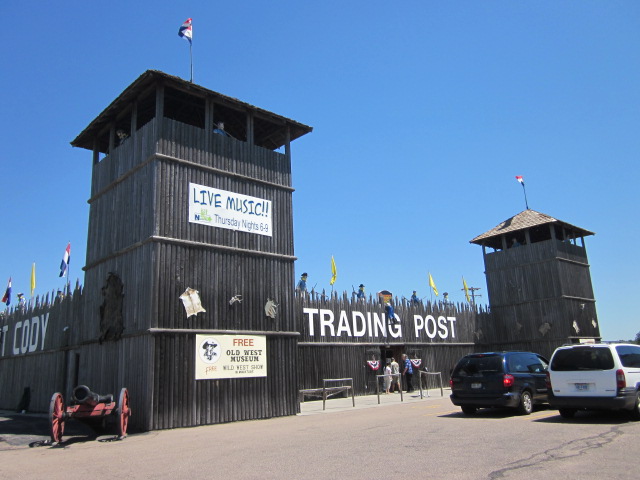
 We got in late after the gig last night, so we got a late start. I had the day off, so we decided to get lunch and explore North Platte, Nebraska. We started at Cody's Trading Post, an obvious tourist trap souvenir shop right off the interstate banking on the legend of Bill Cody's "Buffalo Bill's Wild West" show. There was a lot to look at, though, and it was fun. I picked up a book called, The Wisdom of the Native Americans
 , a couple things for the boy (who is stay with grandma in Colorado while we're here), and the wife picked up a souvenir sticker.
 From there we drove out to the northwest edge of town to visit the Golden Spike Tower overlooking Union Pacific's Bailey Train Yard. At two miles wide and eight miles long, Bailey is the largest train yard in the world. The Golden Spike Tower has an open-air observation deck on the seventh floor and a glassed-in, 360-degree viewing area on the eighth floor overlooking the whole operation. The whole thing is very impressive.
 While we were looking around the eighth-floor viewing area, I came across a brochure for area attractions. My wife spotted Dancing Leaf Cultural Learning Center in Wellfleet. After looking up the location of Wellfleet -- about 25 miles south of North Platte -- we called to see what their hours were. The woman on the phone was happy to give us any information we needed and effectively told us to show up and we would get the tour whenever we arrived. We were even offered to join an earlier group for some traditional native buffalo stew, but we were still full from our late lunch.
 We arrived at Dancing Leaf and were greeted by Les and Jan Hosick. After a quick round of introductions and the obligatory explanation of why were hanging out in North Platte, Les took us to a small building across the driveway from their home. I'll admit, as we walked into the the single-room box with a single row of metal folding chairs and shelves covered with bones and artifacts I wondered if this might turn out to be disappointing. After only a few minutes of listening to Les talk about prehistoric Nebraska I was completely sucked in. He told us about prehistoric geography and why so many artifacts can be found in Nebraska using charts, maps, fossils, bones, and plaster casts. He went on to discuss Native American culture and history with an impressive array of artifacts. After almost an hour of fascinating show& tell and Q&A, we took a short walk out of the classroom to the earth lodge Les has built as a recreation of an actual Native American lodge.
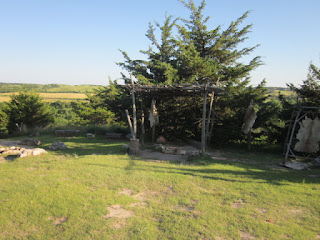
 Outside the lodge are primitive racks for drying and tanning, an arbor of limbs and twigs to form a shaded work area, campfire, and a whole new assortment of artifacts to recreate the entire native family home. Inside the lodge was amazing! While Les admitted to using modern hand-tools -- he spoke quite a bit about the fragility of tools made from stone, sticks, and bones and the need for native peoples to be skilled in tool making -- the lodge is an authentic replica. The temperature inside was probably 15 degrees (fahrenheit) cooler than outside. We sat inside around the fire ring and Les told us about family life in and around the lodge and about construction of the lodge itself.
 By the time we made our way back to the gift shop Les had spent close to two hours with my wife and I and every minute was riveting. I picked up an arrowhead necklace for a souvenir and also picked up a book, How Can One Sell The Air?
 , a study of a speech by Chief Seattle.
"Wild Bill" Cody, the world's largest train yard, and the coolest history field-trip ever. We didn't even make it to Buffalo Bill's Ranch. North Platte, Nebraska is a pretty cool place!
 , a couple things for the boy (who is stay with grandma in Colorado while we're here), and the wife picked up a souvenir sticker.


 Outside the lodge are primitive racks for drying and tanning, an arbor of limbs and twigs to form a shaded work area, campfire, and a whole new assortment of artifacts to recreate the entire native family home. Inside the lodge was amazing! While Les admitted to using modern hand-tools -- he spoke quite a bit about the fragility of tools made from stone, sticks, and bones and the need for native peoples to be skilled in tool making -- the lodge is an authentic replica. The temperature inside was probably 15 degrees (fahrenheit) cooler than outside. We sat inside around the fire ring and Les told us about family life in and around the lodge and about construction of the lodge itself.
 , a study of a speech by Chief Seattle.
"Wild Bill" Cody, the world's largest train yard, and the coolest history field-trip ever. We didn't even make it to Buffalo Bill's Ranch. North Platte, Nebraska is a pretty cool place!
Subscribe to:
Posts (Atom)